Scaling Design at MUFG
Year: 2020-2026
Client: MUFG Investor Services
Field: Financial Services
Disciplines: Design leadership, design operations, design systems, product design
Turning a development-led organisation into a design-led one.
When MUFG Investor Services asked me back on a permanent basis, it was an opportunity to establish design as a discipline in its own right.
At the time, business requirements went directly to development. There was no dedicated design team or defined process for involving design in product delivery.
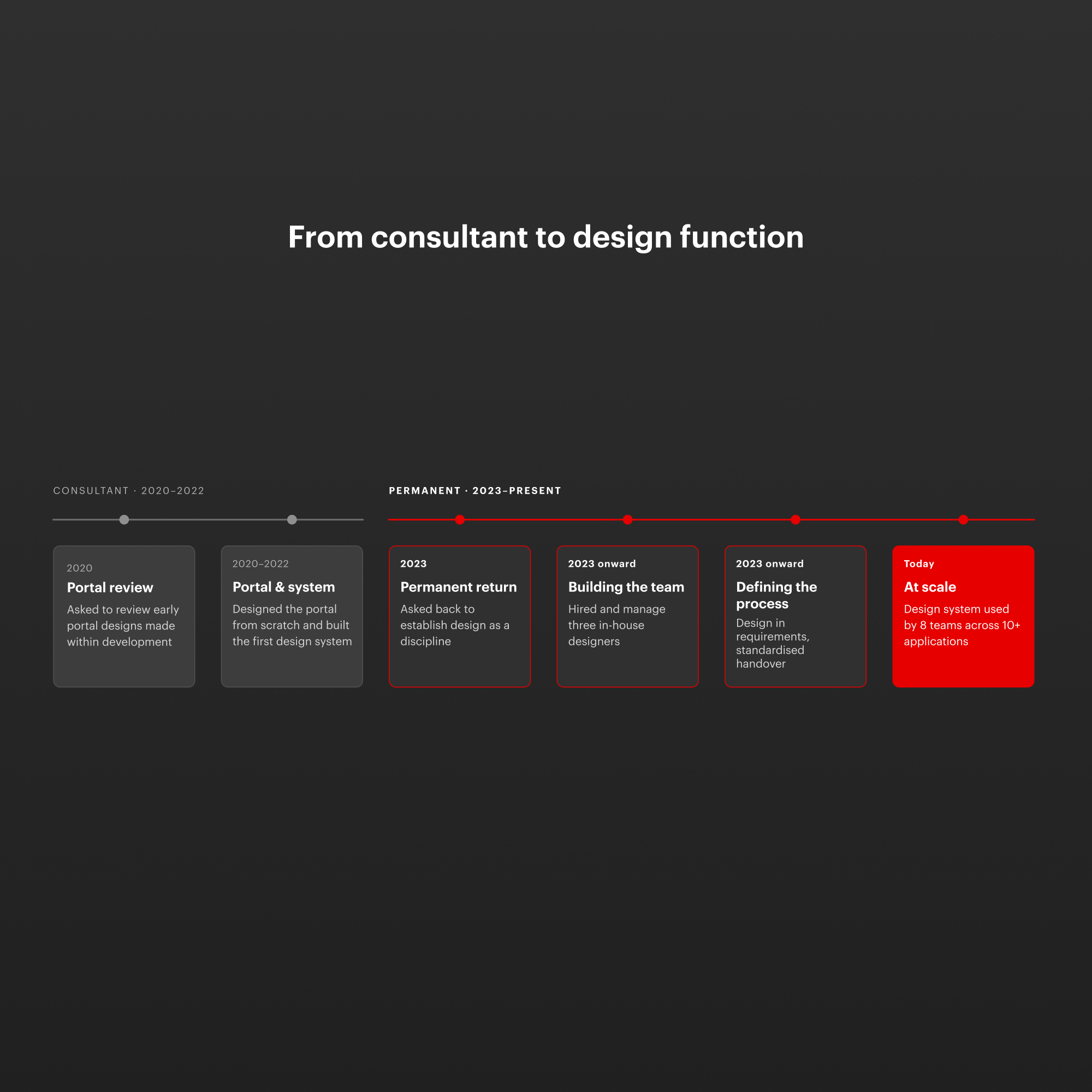
Since first joining MUFG in 2020, I’ve built its design function from the ground up. I hired and now manage a team of three in-house designers, established how design participates in requirements gathering and product delivery, and created the design system used by both our team and external designers on collaborative projects.
Today, the design system is used by eight teams across more than ten applications. Design is now an established part of how products at MUFG are planned and delivered.
The starting point
I already knew the products well, because I’d helped create them. I first joined MUFG in 2020 as a consultant, initially asked to review early portal designs that had been produced within the development team without dedicated design input.
That engagement grew into designing the portal from scratch and building the first version of a design system to support it.
When I returned on a permanent basis, the challenge had changed. The foundations for better product design existed, but there was no defined process for involving design in the work itself.
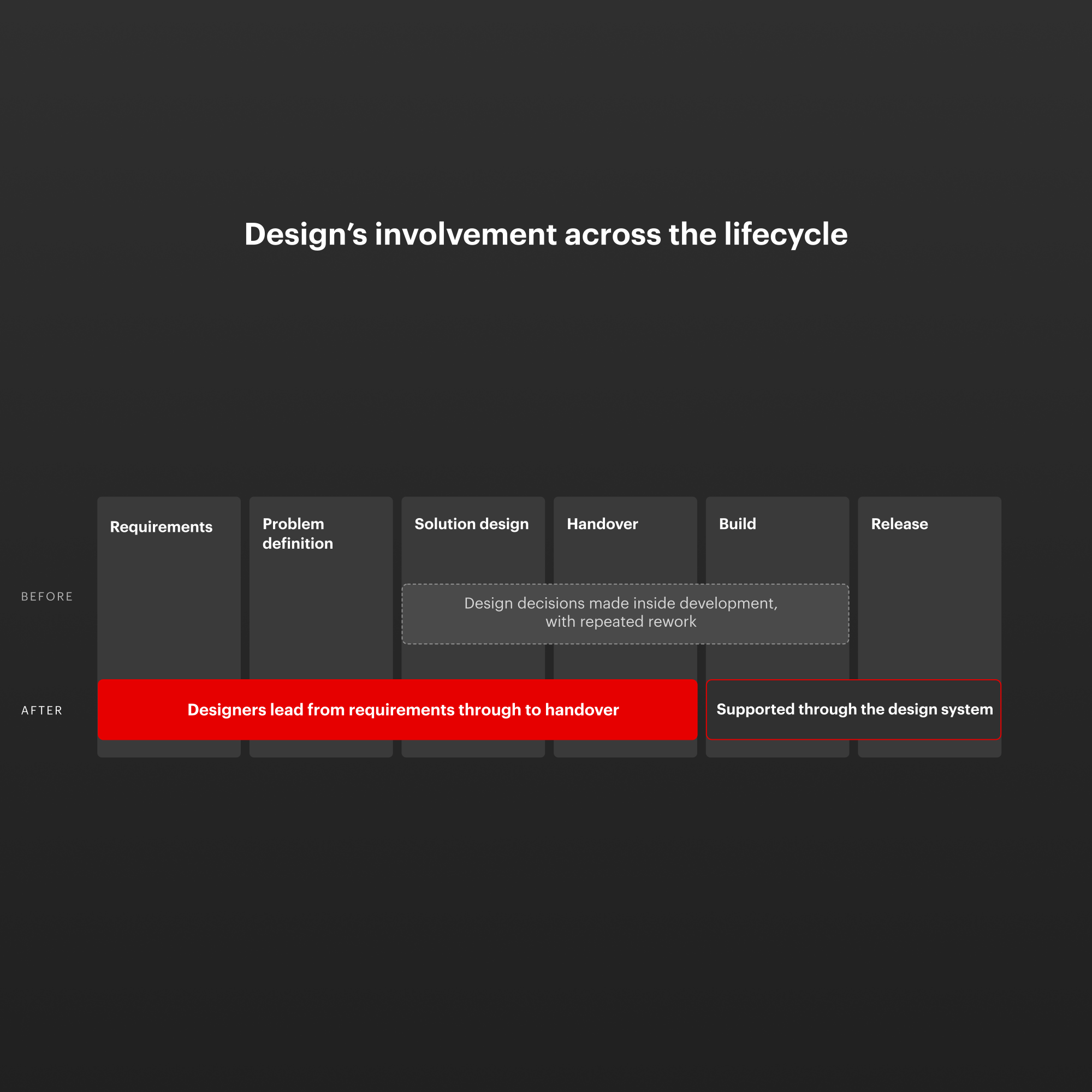
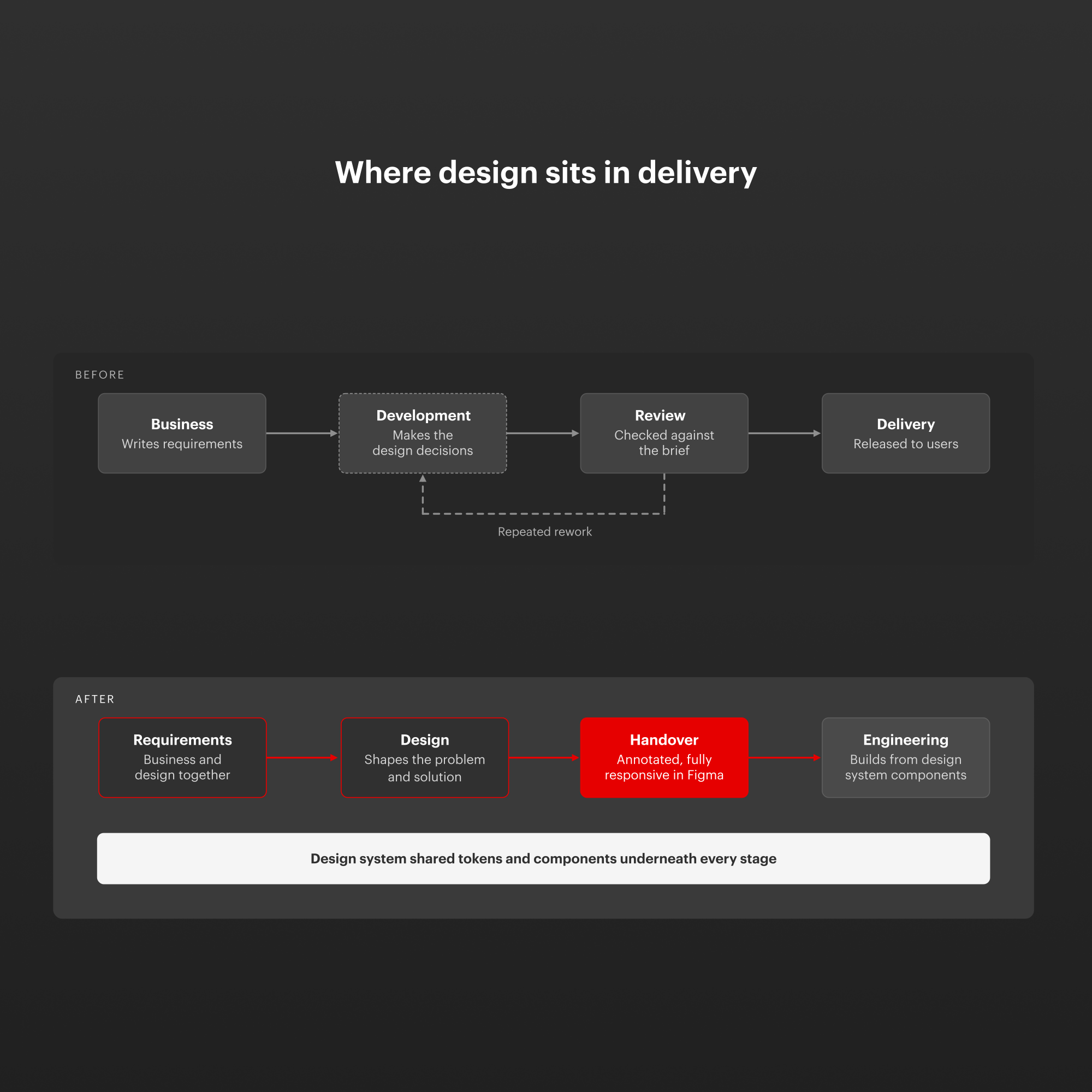
Business requirements were written and passed directly to developers, with design sitting within the development remit. Developers were making design decisions alongside their engineering work, and the process often involved repeated rounds of reworking designs until they met the expectations of the original requirements.
Getting the design to a strong standard was the first step. Making it sustainable meant giving design a defined place in the process, from the initial requirements through to delivery.
Building the team
I hired every designer on the team and manage them directly. I was looking for people comfortable working with complex financial domains, strong systems thinkers, and designers able to hold their own with both business and technical stakeholders.
The team is three in-house designers covering key product areas. On larger collaborative projects, we also work with external designers, who use our design system so their work fits alongside ours.
I set the quality bar through collaboration and involvement in the team’s work, while supporting each designer’s growth and ownership of their product areas.
An important outcome of these changes has been the effect on the team itself. Designers are now involved from the beginning, contributing to requirements and decisions rather than simply applying design to work that has already been defined.
They have a greater sense of ownership and are empowered to influence the products they’re working on from start to finish.
Defining the process
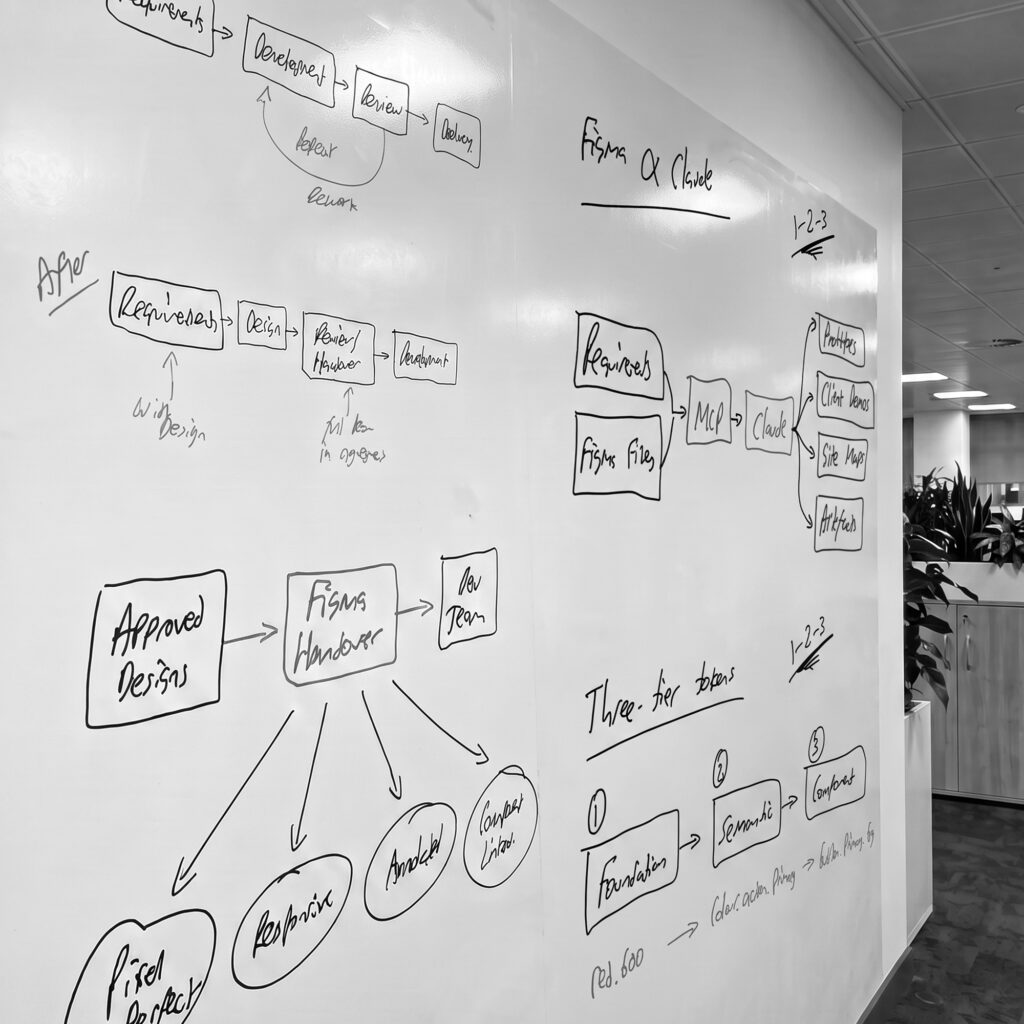
I defined the end-to-end process from scratch, introducing two important changes: bringing design into requirements gathering, and standardising how completed designs are handed over to engineering.
Into design. Design is now a key stakeholder in the initial requirements-gathering process. Rather than receiving a set of requirements after the business has defined the solution, designers work collaboratively with business stakeholders from the outset.
This gives design an opportunity to contribute to the problem definition, challenge assumptions and help shape the requirements before development begins.
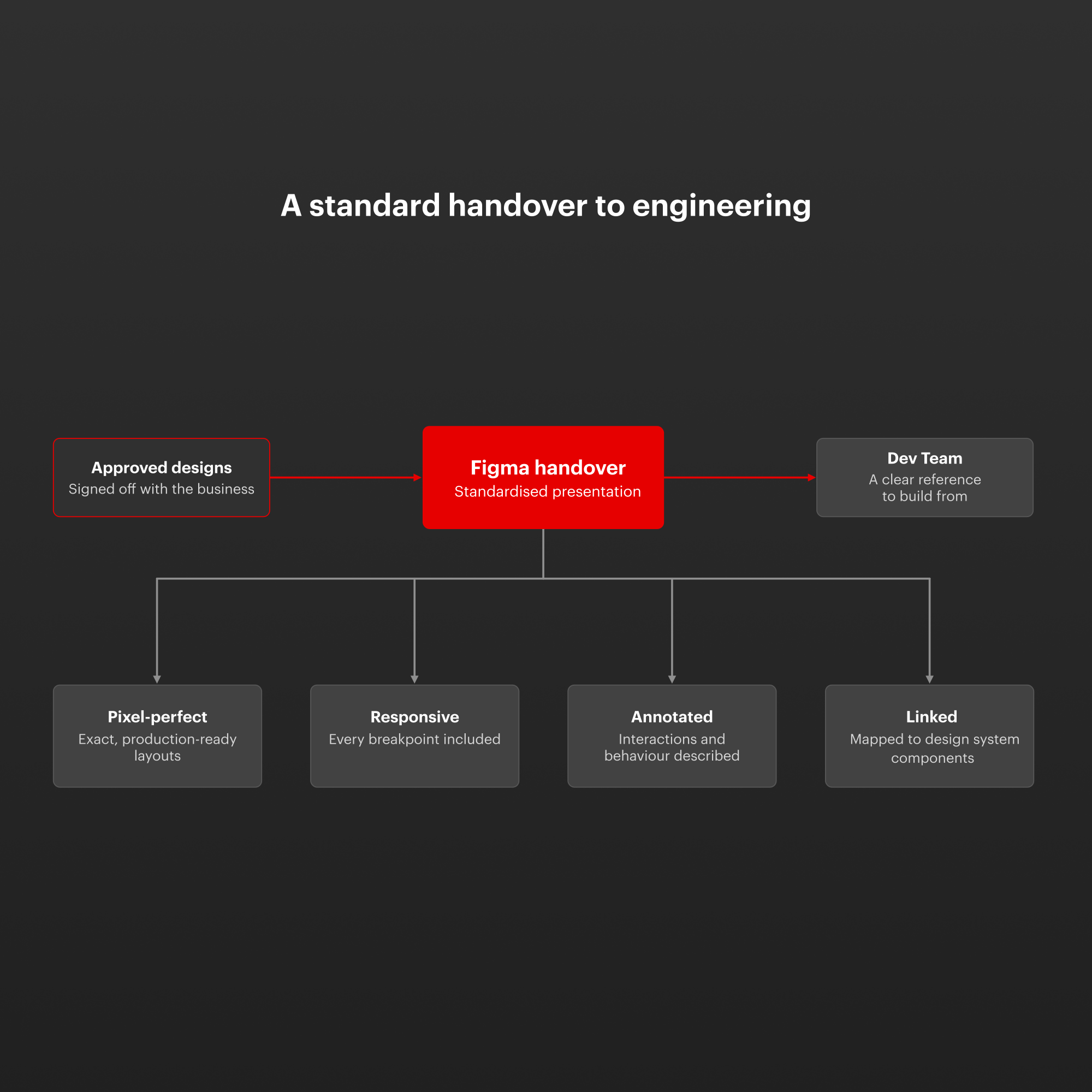
Out of design. Once designs are approved, they are handed over to engineering through a standardised Figma presentation. Files are pixel-perfect, include all responsive designs, and are fully annotated to describe interactions and behaviour.
Crucially, the designs are also linked directly to the corresponding components in our design system, giving developers a clear reference for implementation.
The effect has been a significant reduction in the repeated design changes that previously characterised the process. With design involved earlier, requirements are better understood and solutions are more fully considered before development. The quality of handover has also reduced the need for subsequent design changes or additions once work reaches engineering.
The system underneath
A process only scales if the team shares a language. The design system I’d started during my first engagement became that foundation, and I restructured it around how we work today.
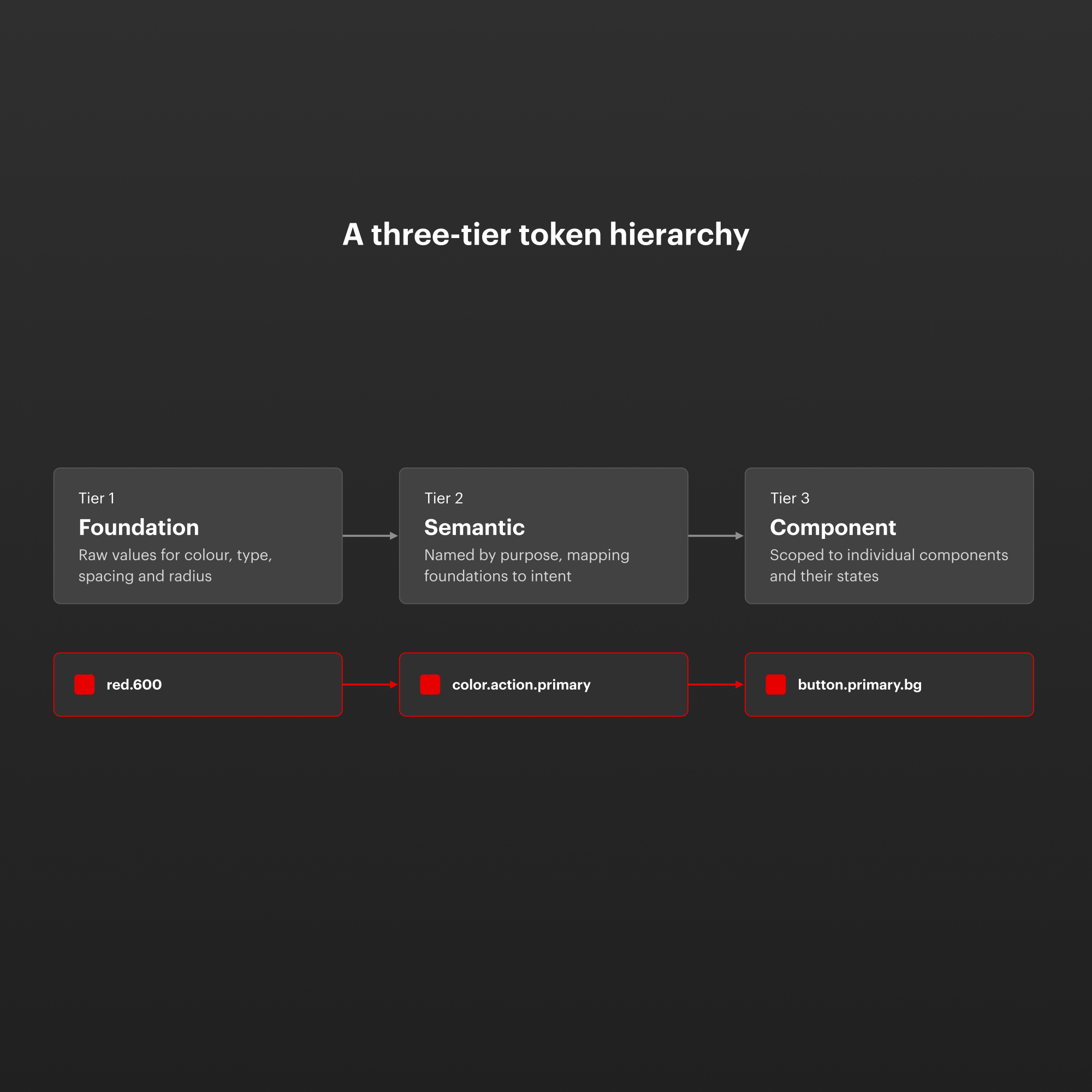
I rebuilt it around a three-tier token hierarchy, creating a more structured relationship between foundational design values, semantic tokens and individual components.
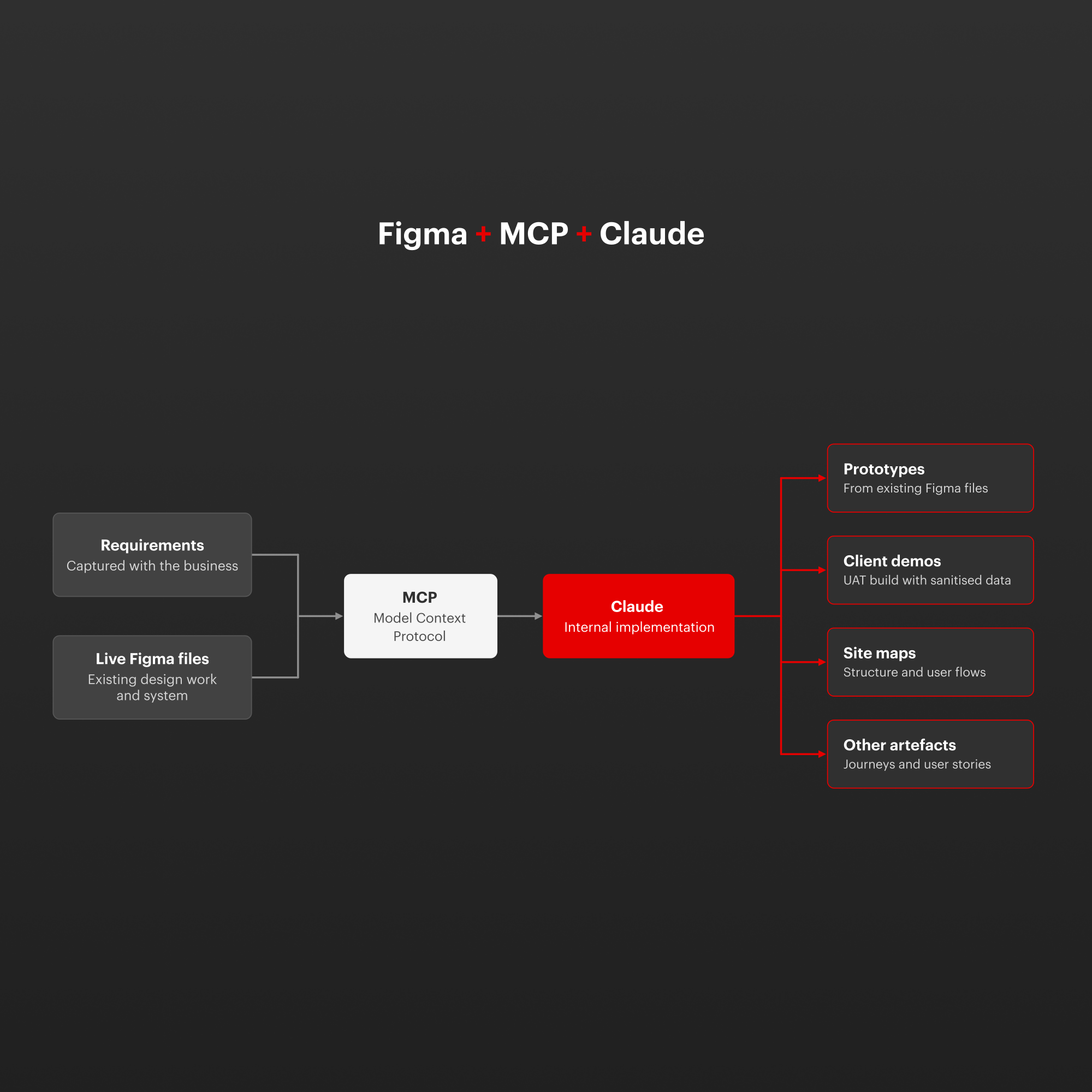
I also connected Figma to our internal implementation of Claude via MCP (Model Context Protocol). This allows Claude to read live Figma files and use existing design work as context to generate prototypes, site maps and other product-design artefacts.
This has introduced new possibilities for AI-assisted design, shortening the journey from requirements and existing design work to tangible concepts that can be explored and developed further.
Alongside this, the design system provides a shared foundation for consistency across products, teams and implementations.
The system is now used by eight teams across more than ten applications. See MUFG Skylight and MUFG SaaS Portals.
Bringing the business with us
A new process means asking people to change how they already work. Product owners needed to involve design earlier, and developers needed to build from considered designs rather than interpreting requirements alone.
The opportunity came from a shared goal: the business wanted to deliver faster and more predictably. I positioned design as part of the solution. By resolving more questions before development, improving consistency and reducing rework, design could help the organisation deliver better products more efficiently.
I’ve built working relationships with the new business verticals in IT and product management, and continue to push for design to have a wider remit across the organisation.
The clearest sign of progress has come from outside our own team. With the process and design system in place, other departments began approaching us for help applying our UI to their own products. It was the first time the wider business had in-house design expertise to draw on.
What changed
Design became an established part of how MUFG builds products, with a significant change in how teams collaborate and deliver work.
- An in-house design team of three, built from the ground up, with every designer hired and managed by me.
- Earlier design involvement, with designers participating collaboratively in initial requirements gathering.
- More effective engineering handovers, through standardised, responsive, fully annotated Figma files linked to design-system components.
- Less rework, with fewer rounds of design changes to meet requirements and fewer changes or additions needed after handover to development.
- A shared design system, now used by eight teams across more than ten applications.
- AI-assisted design workflows, connecting live Figma files to our internal Claude implementation through MCP to generate prototypes, site maps and other artefacts.
- Greater team empowerment, with designers contributing to decisions throughout the product lifecycle rather than simply responding to predefined requirements.